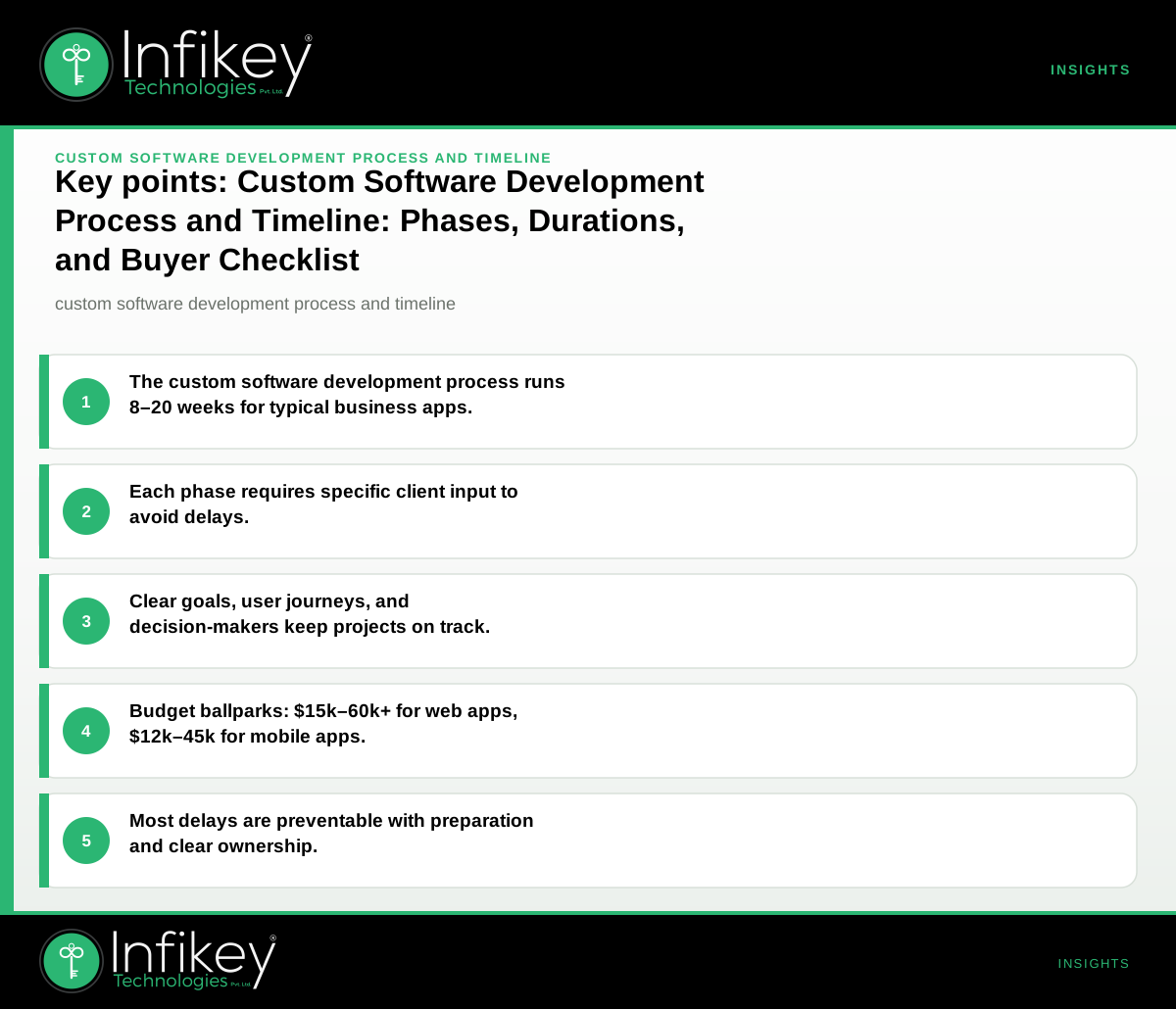
The custom software development process typically runs through five main phases: discovery, design, development, testing, and deployment. For most business applications, the total timeline ranges from 8 to 20 weeks, depending on scope and complexity. Each phase has clear deliverables and requires specific input from the client to stay on track.
Custom Software Development Process: Phases, Durations, and Deliverables
Understanding the custom software development process and timeline is critical for any organization planning a new digital product. The journey from idea to live system is structured into distinct software development phases, each with its own objectives, deliverables, and dependencies. Here’s how these phases typically break down:
| Phase | What Happens | Typical Duration | Deliverable | What the Client Provides |
|---|---|---|---|---|
| Discovery | Requirements, goals, tech choices, scope confirmed | 1–3 weeks | Functional spec, project plan | Business goals, key users, workflows |
| Design | UX/UI wireframes, architecture, user journeys | 2–4 weeks | Wireframes, design assets | Feedback on wireframes, branding assets |
| Development | Coding, integrations, first working version | 4–10 weeks | Working software (MVP/beta) | Clarifications, test data, API access |
| Testing | QA, bug fixing, user acceptance testing | 1–3 weeks | Tested, ready-to-launch app | Test cases, user feedback, sign-off |
| Deployment | Go-live, production setup, documentation, handover | 1 week | Live system, documentation | Domain, hosting, admin access |
Deep Dive: Software Development Phases
- Discovery: This initial phase sets the foundation for the project. Teams collaborate to clarify business objectives, identify user personas, and map out key workflows. The outcome is a detailed functional specification and a project plan, which are essential software development deliverables for a smooth project kickoff.
- Design: User experience (UX) and user interface (UI) wireframes are created, along with system architecture diagrams. Design feedback cycles ensure the product reflects your brand and user needs. This phase also defines user journeys, which are vital for usability and adoption.
- Development: The engineering team writes code, integrates APIs, and builds the first working version (often an MVP or beta). Regular demos and sprint reviews keep stakeholders engaged and allow for early course corrections.
- Testing: Quality assurance (QA) specialists conduct functional, usability, and performance testing. User acceptance testing (UAT) ensures the software meets your expectations before launch. The tested, ready-to-launch application is a major milestone among software development deliverables.
- Deployment: The product is released to production, with all necessary documentation and handover sessions. This phase includes final setup, live environment configuration, and support for the initial rollout.
Note: For a typical web portal or mobile app, the total duration is 8–20 weeks (see [example project shapes](#example-project-shapes-and-timelines)). Final scope and commercials are always confirmed after discovery.
What to Prepare Before Kickoff: Buyer Checklist
A successful custom software project starts with preparation. To avoid software project delays, gather these essentials before kickoff:
- Clear business goals: Define the core problems your software must solve and the value it should deliver.
- Key user journeys: Outline the main actions and workflows users will perform.
- Existing systems and data: Identify any current platforms, APIs, or data sources that need integration.
- Branding assets: Collect logos, color palettes, fonts, and style guides.
- Decision-makers: Assign stakeholders who can provide timely feedback and final sign-off.
- Budget and timeline expectations: Understand the planning ranges (see below) and where flexibility exists.
- Legal, compliance, and data privacy needs: Document any regulatory or cross-border requirements early.
Tip: Early alignment on these points helps minimize scope changes and keeps the custom software project timeline predictable.
Example Project Shapes and Timelines (with Ballparks)
On projects like these, Infikey typically sees:
| Project Type | Scope Summary | Ballpark (USD) | Timeline |
|---|---|---|---|
| Custom web application / portal | Auth, roles, dashboards, integrations, staging/prod | $15,000–60,000+ | 8–20 weeks |
| Mobile app (iOS/Android) | MVP: auth, core flows, API, store submission support | $12,000–45,000 | 10–18 weeks |
| AI feature on existing product | Scoped use-case, prompts/tools, launch | $8,000–35,000 | 6–14 weeks |
How Project Shape Affects Timeline
- Custom web applications (such as portals for financial services or healthcare) often require complex integrations and user management, which can extend the timeline toward the upper end of the range.
- [Mobile app development](/services/mobile-app-development) projects may take longer if both iOS and Android versions are needed, or if app store submission and compliance are involved.
- AI features added to existing products can be delivered faster, especially when the use-case is well-defined and the base platform is stable.
Planning tip: These are realistic planning ranges for global buyers. Final pricing depends on detailed discovery and scope confirmation. For a tailored estimate, use the custom software cost calculator.
Software Development Deliverables: What to Expect
Each phase of the custom software development process produces specific deliverables, which serve as checkpoints for progress and quality:
- Discovery: Functional specification, user stories, project plan, technical stack recommendations.
- Design: Wireframes, clickable prototypes, design system assets, architecture diagrams.
- Development: Source code, working MVP or beta version, integration with APIs and third-party systems.
- Testing: Test reports, bug logs, user acceptance feedback, performance benchmarks.
- Deployment: Live environment setup, user/admin documentation, training sessions, release notes.
Having a clear list of software development deliverables helps both clients and development teams measure progress and maintain accountability.
How to Avoid Software Project Delays
Delays in custom software projects are often preventable. Here are common causes and proven strategies to keep your custom software project timeline on track:
| Common Delay Cause | How to Prevent It |
|---|---|
| Unclear requirements | Prepare clear goals and user journeys upfront |
| Slow feedback or sign-off | Assign a decision-maker with authority |
| Missing assets (logos, data, APIs) | Gather all required materials before design starts |
| Scope changes mid-project | Finalise scope during discovery and control changes |
| Integration issues with 3rd parties | Confirm access and contacts early |
| Time zone misalignment | Set regular check-ins and agree on response times |
Proactive Steps to Stay on Track
- Schedule regular check-ins with your development partner.
- Use shared project management tools for visibility on tasks and deadlines.
- Limit mid-project scope changes; if unavoidable, assess their impact on cost and timeline together.
- Assign a single point of contact for faster decision-making.
Action: Review this table with your internal team before kickoff. Most delays are preventable with preparation and clear ownership.
Post-Launch Software Support: What Happens After Go-Live?
Launching your software is just the beginning. Effective post-launch software support ensures your investment delivers ongoing value. Here’s what to expect:
- Stabilisation support: Immediate bug fixes and urgent issue resolution for 2–4 weeks post-launch.
- Training and documentation: Comprehensive user guides, admin manuals, and live handover sessions to empower your team.
- Iterative improvements: Gathering user feedback and prioritizing enhancements for future releases.
- Ongoing maintenance: Optional support for updates, security patches, and scalability as your user base grows.
Tip: Define your post-launch support terms, SLAs, and communication channels during the project planning phase. Infikey offers managed engineering and software engineering services to support global clients after launch.
Decision Rules for Global Buyers
Making the right decisions at each stage of the custom software development process and timeline can save time and budget. Consider these rules:
- If your requirements are still evolving: Start with a discovery-only engagement to clarify scope, reduce risk, and avoid rework.
- If you need to move fast: Prepare all assets and assign a single empowered decision-maker for rapid feedback.
- If you have strict compliance needs: Share regulatory requirements and data privacy policies early—especially for industries like healthcare, financial services, or public sector.
- If remote delivery is new to you: Request regular demos, clear documentation, and transparent progress updates.
Questions to Ask Your Development Partner
To ensure alignment and avoid surprises, ask these questions before starting your project:
- What are the key milestones and software development deliverables at each phase?
- How will changes in scope be managed and communicated?
- What tools will be used for project tracking and collaboration?
- What is the process for user acceptance testing and sign-off?
- What post-launch software support is included, and what options are available for ongoing maintenance?
Next Steps
Ready to plan your custom software project? Review your checklist, confirm your budget range, and contact Infikey for a detailed proposal or to discuss your requirements with a delivery lead. For more insights on the custom software development process and timeline, explore our blog or learn more about our software engineering and managed engineering services.