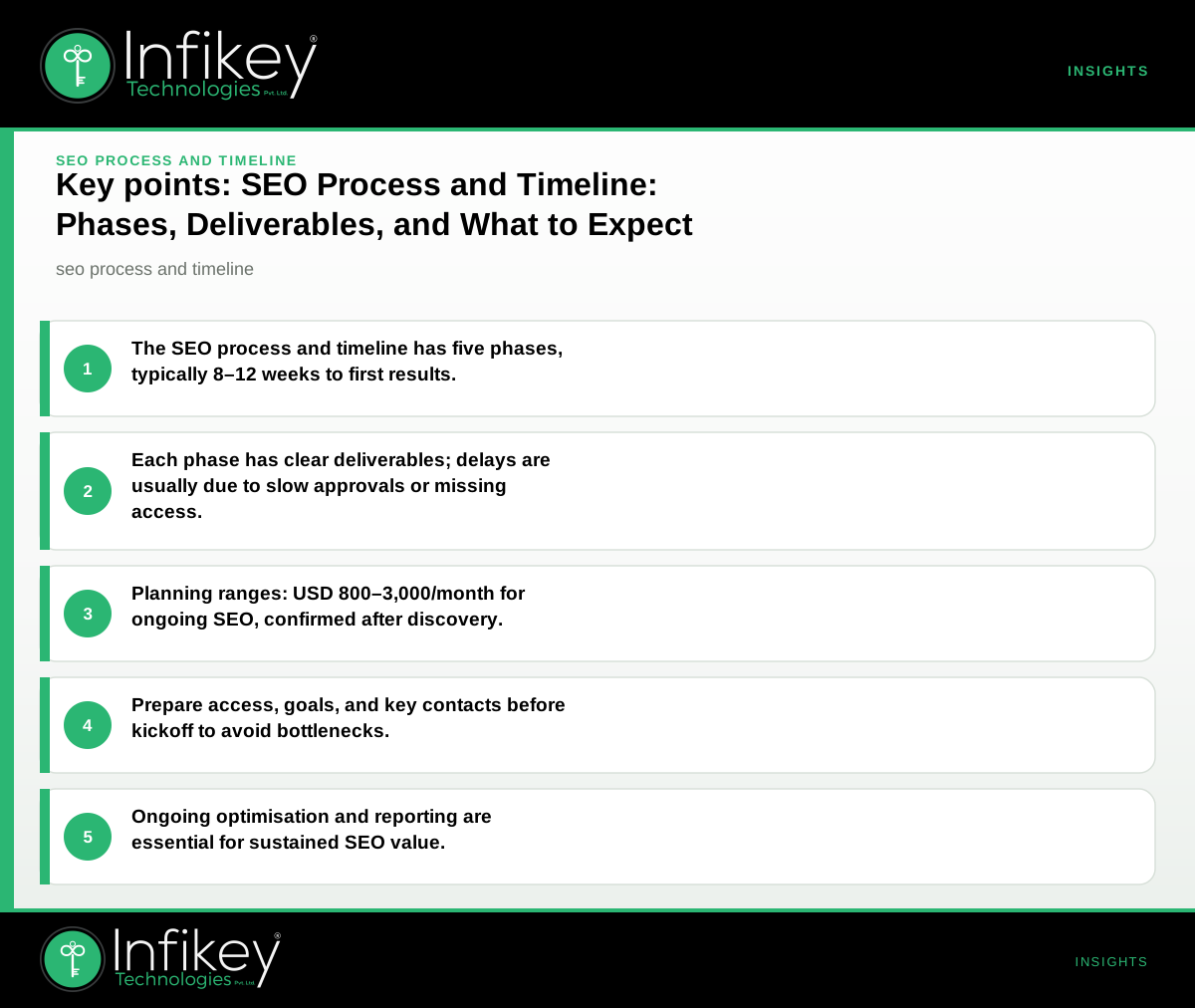
The SEO process and timeline typically covers five phases: discovery, audit, strategy, implementation, and ongoing optimisation. For most businesses, the initial foundation takes 8–12 weeks, with ongoing results building over months. Each phase has clear deliverables and requires specific input from your team to stay on schedule.
SEO Process and Timeline: Phases, Durations, and Deliverables
Understanding the full SEO process and timeline helps set realistic expectations and ensures that both your team and your SEO partner are aligned on goals, responsibilities, and outcomes. Here’s a breakdown of the typical phases, their durations, and what you can expect at each step:
| Phase | What Happens | Typical Duration | Deliverable | What the Client Provides |
|---|---|---|---|---|
| Discovery | Goals, audience, competitors, baseline metrics | 1 week | Project brief, baseline report | Access to analytics, key contacts |
| Audit | Technical, content, backlink, and competitor analysis | 1–2 weeks | Audit report, priority list | Website access, past reports |
| Strategy | Keyword research, roadmap, KPIs, content plan | 1–2 weeks | SEO strategy document | Product/service info, approvals |
| Implementation | On-page fixes, technical SEO, content updates | 3–6 weeks | Implementation summary | Content approvals, IT support |
| Ongoing Optimisation | Link building, reporting, iteration, new content | Ongoing (monthly) | Monthly report, recommendations | Feedback, new offers/updates |
Planning range: For a typical digital marketing and SEO retainer, expect USD 800–3,000/month (confirmed after discovery), with first useful signals in 8–12 weeks.
What Do the SEO Project Phases Involve?
- Discovery: This initial phase is about understanding your business, objectives, and existing digital footprint. Your SEO partner will request access to analytics tools, key contacts, and any existing documentation. The goal is to establish a clear starting point and align on priorities.
- Audit: A comprehensive audit covers technical health (site speed, mobile-friendliness, crawlability), content quality, backlink profile, and competitor benchmarks. This phase identifies quick wins and longer-term opportunities, forming the foundation for the strategy.
- Strategy: Using audit insights, the team develops a roadmap that includes keyword research, content planning, and technical priorities. KPIs are set, and a content calendar or topic cluster plan is proposed. This document guides all future actions and is tailored to your business goals and target audience.
- Implementation: Here, on-page SEO changes (metadata, headings, internal linking), technical fixes (site structure, schema, speed), and initial content updates are executed. Collaboration with your IT and content teams is critical to avoid bottlenecks. This phase may also include setting up tracking, dashboards, and reporting frameworks.
- Ongoing Optimisation: SEO is not a one-time task. Monthly activities include link building, content creation, technical monitoring, and regular reporting. The team iterates based on results, competitor changes, and evolving search trends.
How Long Does SEO Take? Setting Realistic Expectations
A common question is: how long does SEO take to deliver measurable results? While some technical fixes can improve site health quickly, meaningful gains in rankings, organic traffic, and conversions usually take time. Here’s what to expect:
- Initial signals: 8–12 weeks after implementation, you may see improvements in site health, indexation, and some keyword rankings.
- Tangible growth: 3–6 months is typical for noticeable increases in organic traffic and leads, especially in competitive markets.
- Sustained results: 6–12 months of ongoing optimisation is often needed for significant, lasting gains and to defend against competitors.
The exact timeline depends on your starting point, industry competition, website size, and how quickly you can implement recommendations. For example, a new website or one with technical debt may take longer than an established site with a solid foundation.
SEO Deliverables: What Should You Expect?
Clear, actionable deliverables are a hallmark of a professional SEO engagement. Typical SEO deliverables include:
- Audit report: Detailed findings on technical, content, and backlink health, plus a prioritised action list.
- Keyword research: A list of target keywords, search intent mapping, and recommended landing pages.
- SEO strategy document: Roadmap, KPIs, content plan, and timeline.
- Implementation summary: Documentation of all changes made, including on-page updates, technical fixes, and content additions.
- Monthly reports: Transparent updates on rankings, traffic, conversions, and next steps.
- Recommendations: Ongoing suggestions for new content, technical enhancements, and link-building opportunities.
SEO Implementation Steps: A Closer Look
The implementation phase is where strategy turns into action. Key SEO implementation steps include:
- Technical fixes: Address crawl errors, improve site speed, implement structured data, and ensure mobile usability.
- On-page optimisation: Update meta tags, headers, internal linking, and image alt text for priority pages.
- Content updates: Refresh outdated content, optimise for target keywords, and fill content gaps identified in the strategy.
- Tracking setup: Configure Google Analytics, Search Console, and custom dashboards to monitor KPIs.
- Link building: Begin outreach for quality backlinks and citations to boost domain authority.
- Quality assurance: Test all changes for functionality and SEO impact before and after deployment.
What to Prepare Before SEO Kickoff: SEO Client Checklist
Before starting, prepare these to avoid delays and ensure a smooth SEO process:
- Access details: Admin login for website, CMS, analytics, and search console.
- Business goals: Clear objectives (traffic, leads, sales, visibility).
- Key contacts: Decision-makers for approvals and technical queries.
- Brand guidelines: Logo, tone of voice, approved messaging.
- Past reports: Any previous SEO, PPC, or analytics reports.
- Product/service info: Up-to-date descriptions, USPs, target audience.
- Content assets: Existing blogs, brochures, videos, or case studies.
Having these ready ensures that your SEO partner can hit the ground running and that the project stays on track.
What Usually Causes SEO Delays (and How to Prevent Them)
Delays in the SEO process and timeline are often avoidable. Common causes include:
- Slow approvals: Assign a primary contact with the authority to review and approve content or technical changes within 2–3 days.
- Missing access: Test all logins (website, analytics, search console) before kickoff; share credentials securely.
- Content bottlenecks: Pre-approve key topics and provide product details early. If internal resources are limited, clarify if the agency will draft content.
- Technical restrictions: Inform your IT team about planned changes and schedule maintenance windows if needed.
- Unclear objectives: Align on KPIs and priorities in the first week. Update them only if business needs change.
Proactive communication and clear roles prevent most bottlenecks. Use the SEO client checklist above to prepare your team and resources ahead of time.
After Launch: Support, Iterations, and Handover
After the initial implementation, SEO moves into an ongoing cycle of optimisation:
- Monthly reporting: Expect clear reports on rankings, traffic, and next steps.
- Continuous improvement: New keywords, content ideas, and technical tweaks are proposed based on results.
- Knowledge transfer: If you plan to bring SEO in-house, request documentation and process handover sessions.
- Support: Most retainers include Q&A and minor adjustments; clarify the SLA and scope in your contract.
SEO is an iterative process. Regular reviews ensure your strategy adapts to algorithm updates, competitor moves, and business changes. If you’re considering a handover, ask for process documentation and training to ensure a smooth transition.
Example SEO Project Shapes and Planning Ranges
On projects like these, we typically see:
- SME service site: Technical SEO, content plan, on-page, and reporting. Planning range: USD 800–3,000/month; first signals in 8–12 weeks.
- Brochure website build with SEO: Design, 8–15 pages, CMS, SEO foundations. Planning range: USD 4,000–12,000; timeline 4–8 weeks.
Final scope and commercials are confirmed after discovery. For a tailored estimate, contact Infikey or see our Digital marketing and SEO service.
Questions to Ask Your SEO Partner Before Starting
Before you commit, ask your SEO partner:
- What is the expected timeline for each phase?
- Which deliverables will I receive, and when?
- What input or approvals will you need from my team?
- How will progress be measured and reported?
- What happens if we miss a deadline or need to pause?
- How is ongoing support structured after launch?
For buyers working with remote teams, confirm time zone overlaps, preferred communication channels, and documentation standards. Infikey provides detailed documentation and USD-friendly planning ranges for global buyers.
Ready to clarify your SEO process and timeline? See our Digital marketing and SEO service or contact us for a discovery call.