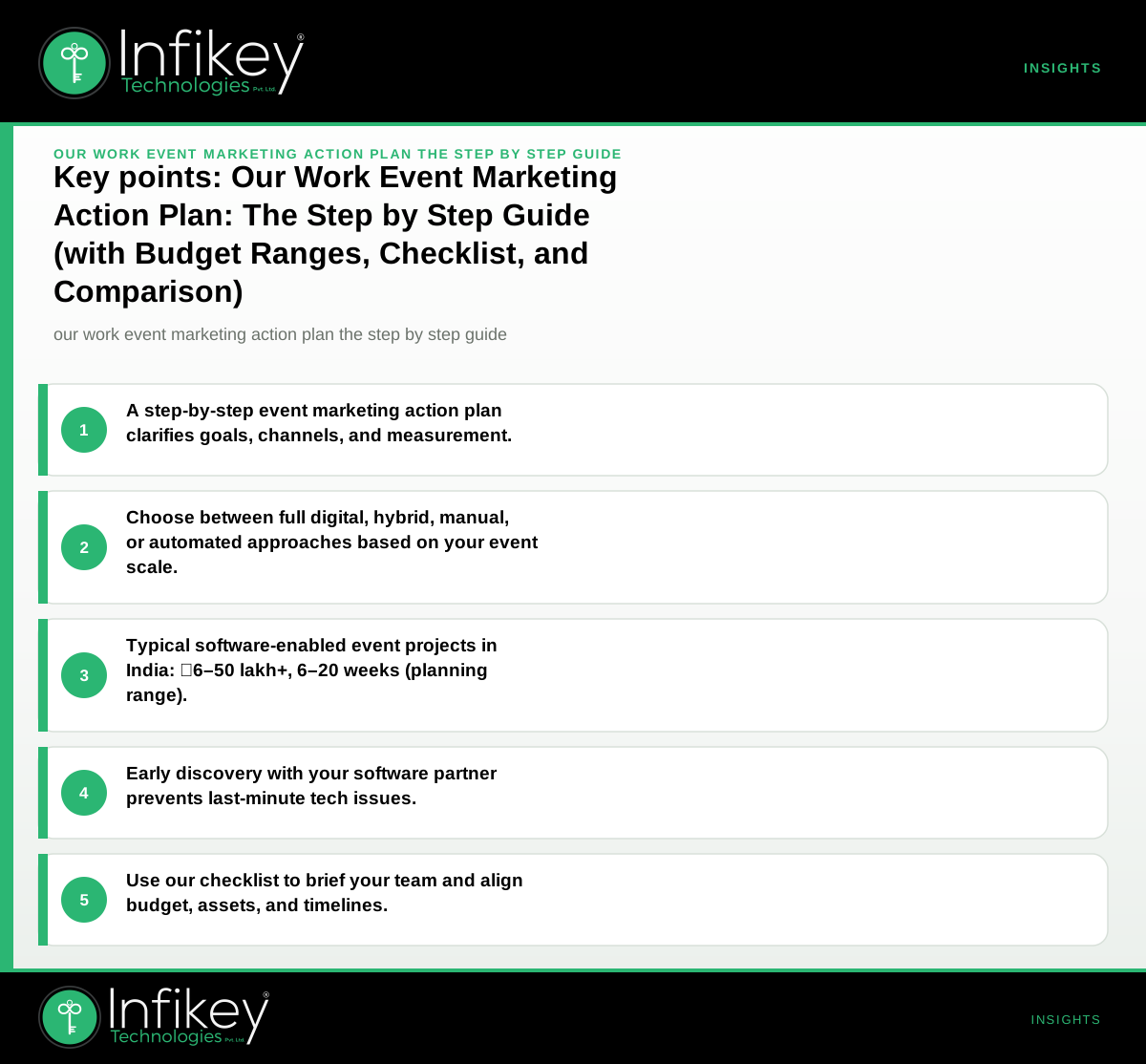
A work event marketing action plan is a structured, step-by-step approach to promoting your business event—covering goals, audience, channels, creative, and measurement. Businesses in India need this when launching a new product, hosting a conference, or running a major campaign, especially when software, web, or app development is involved.
How a Work Event Marketing Action Plan Works: Step by Step
On projects like these, we typically follow these steps to ensure clarity, alignment, and measurable outcomes:
- Define objectives: What does success look like? (e.g., sign-ups, leads, sales)
- Identify the target audience: Who are you trying to reach? Segment by industry, role, or behaviour.
- Select channels: Choose digital (website, app, email, social) and offline (print, OOH, direct mail) as needed.
- Craft the message and creative: Develop event branding, landing pages, and campaign assets.
- Build the tech stack: Website or app updates, integrations, registration flows, analytics setup.
- Launch and promote: Roll out campaigns, monitor engagement, adjust as needed.
- Measure and report: Track KPIs, gather feedback, and document learnings.
If your event depends on a new website, app, or custom registration flow, involve your software engineering partner early to avoid last-minute surprises.
Decision Rules for Each Step
- Objectives: Tie goals to business outcomes (e.g., qualified leads, brand awareness, demo sign-ups).
- Audience: Use data from past events or CRM to refine targeting. For B2B, segment by company size or role; for B2C, consider demographics and interests.
- Channels: Digital-first for tech-savvy or remote audiences; hybrid event marketing approach for broader reach.
- Creative: Ensure consistency across all assets; localise messaging for Indian audiences where relevant.
- Tech stack: Prioritise platforms that integrate easily with your CRM and analytics tools; consider scalability for future events.
- Promotion: Schedule campaigns in advance; use A/B testing to optimise messaging.
- Measurement: Define KPIs upfront—registrations, attendance, engagement, post-event feedback.
Event Marketing Plan India: Local Context Matters
An event marketing plan in India must account for regional diversity, digital adoption rates, and preferred communication channels. For example, WhatsApp and SMS are often more effective than email for reminders, while in-person touchpoints remain important in many cities. Consider:
- Language and localisation: Translate key materials into local languages if targeting multiple regions.
- Channel mix: Combine digital (SEO, paid ads, social media) with traditional (print, radio, OOH) for maximum reach.
- Cultural timing: Avoid major holidays or exam periods when scheduling events.
- Payment and registration: Offer UPI and local payment gateways for smooth registration.
A tailored event marketing plan India approach increases your odds of success by aligning with local preferences and behaviours.
Table: Marketing Action Plan Approaches, Best Use, and Trade-offs
| Approach | Best For | Trade-off |
|---|---|---|
| Full digital (site/app + online) | Tech-driven events, remote audiences | Higher upfront cost, more setup |
| Hybrid (digital + offline) | Local events, mixed audiences | Coordination complexity |
| Manual (email, basic site) | Small-scale, internal events | Limited reach, manual tracking |
| Automated (CRM, analytics, AI) | Large-scale, repeatable events | Requires integration, higher learning |
Rule of thumb: If your audience expects digital touchpoints (registration, reminders, post-event content), invest in a robust software-enabled approach.
Event Marketing Budget and Timeline: What to Plan For
Budgeting for event marketing in India requires balancing ambition with available resources. The event marketing budget and timeline should reflect:
- Scope of digital assets: Custom portals, mobile apps, and AI features increase costs but add value.
- Channel selection: Paid media, influencer partnerships, and OOH require separate allocations.
- Creative production: High-quality branding and content may need dedicated design resources.
- Software and integrations: Factor in costs for registration tools, analytics, and CRM.
- Contingency: Allocate 10–15% for unforeseen adjustments (e.g., last-minute tech fixes, extra promotion).
Typical Budget and Timeline Ranges (India, 2024)
For events needing new software, websites, or app features, these are realistic planning ranges (final scope confirmed after discovery):
| Project Shape | INR Ballpark | Timeline |
|---|---|---|
| Custom web application/portal for event | ₹12–50 lakh+ | 8–20 weeks |
| Mobile app (iOS/Android, event features) | ₹10–35 lakh | 10–18 weeks |
| AI feature (chatbot, analytics, RSVP) | ₹6–28 lakh | 6–14 weeks |
These figures include GST and hybrid on-site/remote delivery, common for Ahmedabad and pan-India buyers. Confirm final commercials after a discovery call.
Event Marketing Checklist: Your Step-by-Step Guide
A robust event marketing checklist ensures nothing falls through the cracks. Use this as your event marketing action plan the step by step guide:
- Clarify your event goals and KPIs (e.g., 500 sign-ups, 100 demos booked)
- List all required digital assets (website, landing page, app, integrations)
- Decide on channels (email, WhatsApp, SEO, paid ads, offline)
- Prepare your creative brief (branding, messaging, content)
- Engage a software engineering partner (Software engineering), share your checklist, and request a discovery session
- Review ballpark budgets/timelines (see table above)
- Agree on milestones and reporting cadence
- Set up analytics and feedback loops (track registrations, engagement, and post-event surveys)
- Test all digital assets before launch (registration, payment, notifications)
- Schedule post-event follow-ups (thank-you emails, content sharing, feedback collection)
Tip: Early clarity on digital requirements reduces rework and keeps your event on track.
Software for Event Marketing: Choosing the Right Tools
Modern event marketing relies on software for seamless execution. The right software for event marketing can automate registrations, track engagement, and personalise outreach. Key categories include:
- Event management platforms: For registration, ticketing, and attendee tracking.
- CRM integration: To manage leads and automate follow-ups.
- Email and SMS automation: For reminders and updates.
- Analytics tools: To monitor campaign performance and attendee behaviour.
- Mobile event apps: For real-time engagement, agendas, and networking.
When selecting software, prioritise solutions that integrate with your existing tech stack and offer scalability for future events. If your requirements are unique, consider custom software development (Software engineering) to ensure full alignment with your event marketing plan India needs.
Hybrid Event Marketing Approach: Maximising Reach and Engagement
A hybrid event marketing approach combines digital and offline tactics to reach both virtual and in-person audiences. This is especially effective for:
- Conferences and seminars: Offer live streaming for remote attendees while hosting on-site sessions.
- Product launches: Use digital campaigns to drive footfall to physical venues, with follow-up webinars for broader reach.
- Community events: Blend local meetups with online engagement (social media, WhatsApp groups).
Key Considerations for Hybrid Events
- Synchronise messaging: Ensure consistency across online and offline channels.
- Leverage technology: Use event apps for agenda updates, networking, and feedback.
- Plan logistics: Coordinate on-site staff and digital support for smooth execution.
- Measure both streams: Track attendance, engagement, and outcomes for both in-person and online participants.
Hybrid event marketing approach is increasingly popular in India’s metro cities like Ahmedabad, where digital adoption is high but in-person networking remains valued.
Choosing the Right Approach for Your Event
- If your event is public-facing or involves registrations, prioritise a robust web/app experience.
- If you’re running multiple events or need automation, consider CRM and analytics integration.
- If budget is tight, start with manual or hybrid approaches and scale up for future events.
Discuss your goals with your software partner (Contact Infikey) to match the right mix of tech and marketing.
Example Project Shapes: Ballpark Budgets and Timelines
- A mid-sized company launching a new product event: Custom web portal with registration, analytics, and email automation. Budget: ₹12–50 lakh+, Timeline: 8–20 weeks.
- An SME hosting a hybrid seminar: Mobile app for attendee engagement plus landing page. Budget: ₹10–35 lakh, Timeline: 10–18 weeks.
- A business adding AI-driven RSVP and feedback to an existing site: AI feature integration. Budget: ₹6–28 lakh, Timeline: 6–14 weeks.
These are planning ranges—final scope and commercials are set after a detailed discovery.
Key Questions to Ask Before You Start
- What are your non-negotiable event outcomes?
- Which digital assets must be ready before launch?
- What is your realistic budget and timeline?
- Who will own content, tech, and promotion?
- How will you measure event success?
- Do you need a hybrid event marketing approach or is digital-only sufficient?
- Which software for event marketing best fits your needs—off-the-shelf or custom?
Next Steps
Ready to build your event marketing action plan or need clarity on the tech side? Contact Infikey or see our Software engineering page for a structured discovery and planning process tailored to India’s SME and mid-market context.