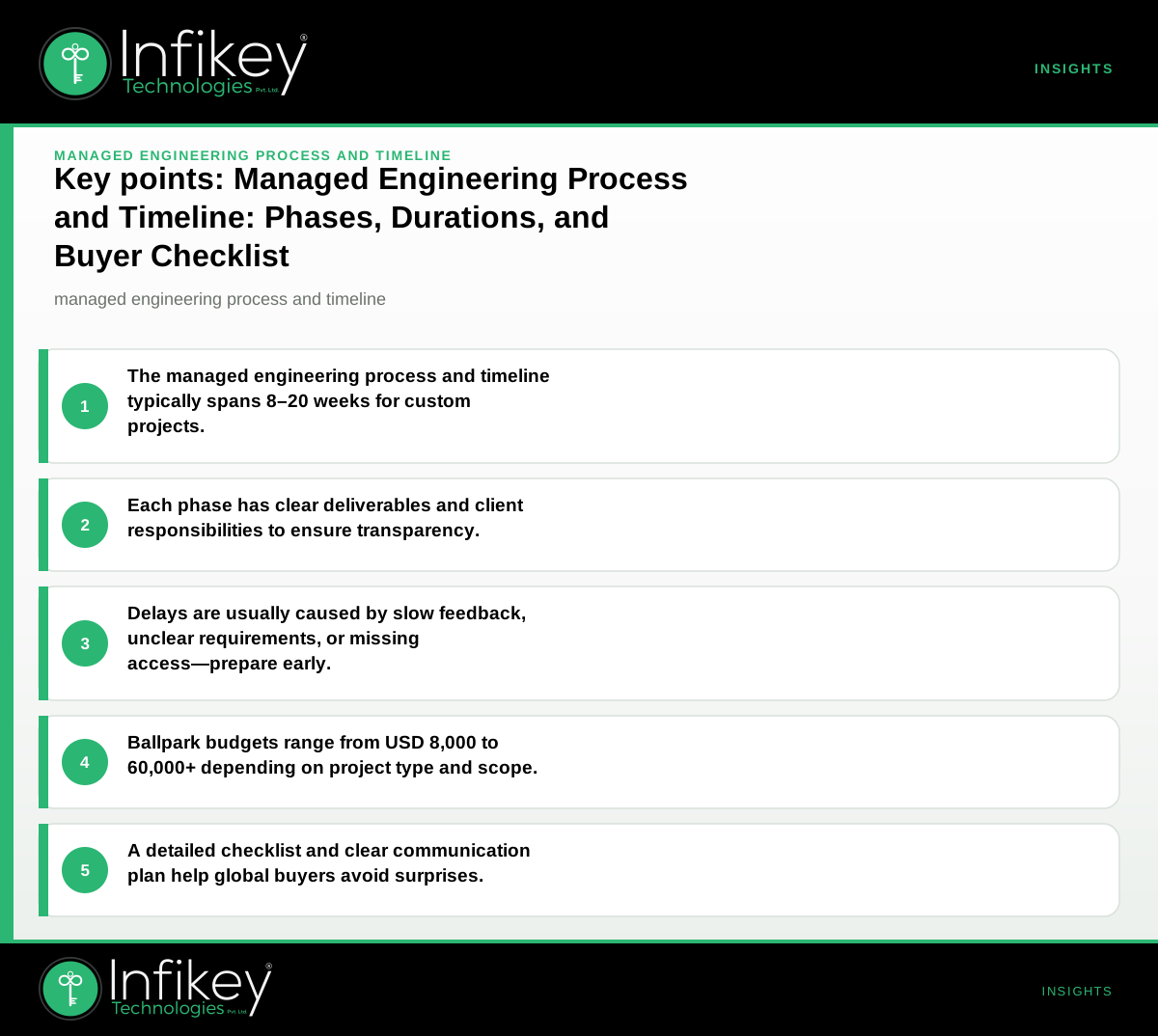
The managed engineering process and timeline covers five main phases: discovery, planning, build, acceptance, and launch/support. For a typical custom web or mobile project, the total duration ranges from 8 to 20 weeks, depending on complexity and readiness. Each phase has clear deliverables and client responsibilities, ensuring ownership and transparency for international buyers.
Managed Engineering Phases, Durations, and Deliverables
A successful managed engineering process and timeline relies on a clear breakdown of phases, with each step designed to maximize transparency, reduce risk, and ensure on-time delivery. Understanding the managed engineering phases and their deliverables is essential for both technical and non-technical stakeholders.
| Phase | What Happens | Typical Duration | Deliverable | What the Client Provides |
|---|---|---|---|---|
| Discovery | Goals, requirements, technical assessment, priorities | 1–3 weeks | Discovery report, scope outline | Business goals, key users, constraints |
| Planning | Solution design, project plan, architecture, estimates | 1–2 weeks | Architecture, delivery roadmap | Feedback, existing docs, stakeholder input |
| Build | Development, integration, regular demos | 4–12 weeks | Working software, sprint reviews | Timely feedback, test data, clarifications |
| Acceptance | UAT, bug fixes, sign-off | 1–2 weeks | UAT report, go-live checklist | Test scenarios, acceptance criteria |
| Launch/Support | Go-live, monitoring, handover, support setup | 1–2 weeks | Live system, support plan | Launch approvals, support contacts |
Phase Details and Decision Rules
- Discovery: This phase sets the foundation for the managed engineering process and timeline. It involves workshops, stakeholder interviews, and technical assessments to clarify the project’s direction. Decision rules at this stage include prioritizing features based on business impact and technical feasibility. The output—a discovery report and scope outline—serves as the single source of truth for all future phases.
- Planning: Here, the project timeline for managed engineering is refined. Solution architecture, technology stack, and delivery milestones are defined. Infikey recommends involving both business and technical stakeholders to review architecture and estimates, ensuring alignment and reducing rework risk.
- Build: The build phase is typically the longest and most resource-intensive. Managed engineering deliverables include working software, sprint reviews, and integration demos. To keep the project on track, establish a routine for feedback and clarify change management protocols early. The build phase is where preventing project delays is most critical—timely feedback and clear test data from the client are essential.
- Acceptance: User acceptance testing (UAT) is structured and criteria-driven. Infikey provides a UAT report and go-live checklist, ensuring all acceptance criteria are met before sign-off. Clients should prepare test scenarios and acceptance criteria in advance to streamline this phase.
- Launch/Support: This final phase ensures a smooth transition from project to operations. Deliverables include a live system, support plan, and handover documentation. Clients provide launch approvals and designate support contacts. Post-launch support in managed engineering is tailored to the client’s needs, with clear escalation paths and support hours.
Project Timeline for Managed Engineering: What to Expect
The project timeline for managed engineering is influenced by several factors:
- Project complexity: More integrations, custom features, or regulatory requirements extend timelines.
- Stakeholder availability: Delays in feedback or decision-making can impact the schedule.
- Readiness of assets: Access to existing systems, APIs, and documentation accelerates the build phase.
A typical managed engineering project at Infikey follows these durations:
- Custom web application/portal: 8–20 weeks
- Mobile app (iOS + Android, Flutter): 10–18 weeks
- AI feature on existing product: 6–14 weeks
These ranges reflect remote delivery, thorough documentation, and clear ownership—critical for global buyers seeking reliability and predictability.
Managed Engineering Deliverables: What You Receive
Each phase produces specific managed engineering deliverables, ensuring transparency and accountability:
- Discovery report: Outlines goals, requirements, and constraints, forming the project’s baseline.
- Architecture and delivery roadmap: Details the technical solution, milestones, and dependencies.
- Working software and sprint reviews: Demonstrates incremental progress, with regular demos and feedback loops.
- UAT report and go-live checklist: Confirms that the solution meets agreed acceptance criteria and is ready for launch.
- Live system and support plan: Ensures operational readiness, with documentation and training for ongoing success.
Infikey’s approach emphasizes documentation and communication at each step, so clients always know what to expect and when.
Preventing Project Delays: Best Practices
Preventing project delays is a shared responsibility. Infikey recommends the following steps to keep your managed engineering process and timeline on track:
| Common Delay Cause | Prevention Tip |
|---|---|
| Slow feedback or approvals | Assign a dedicated project sponsor and backup reviewer. |
| Unclear requirements or scope changes | Finalise scope in discovery; document all changes and impacts. |
| Missing access to systems or data | Prepare credentials and test data before build starts. |
| Stakeholder unavailability (holidays/time zones) | Schedule key meetings in advance; clarify time zone overlaps. |
| Late identification of compliance/security needs | Raise all regulatory or security requirements in discovery. |
Steps to Avoid Delays
- Assign clear roles: Identify a project sponsor, technical lead, and backup for approvals.
- Document requirements early: Use the discovery phase to finalize scope and avoid mid-project changes.
- Prepare assets: Ensure all necessary credentials, test data, and documentation are ready before the build phase.
- Schedule proactively: Book key meetings and demos in advance, accounting for time zone differences.
- Flag compliance needs early: Regulatory and security requirements should be raised during discovery to avoid late-stage surprises.
What to Prepare Before Kickoff: Buyer Checklist
Thorough preparation before kickoff is vital for a smooth managed engineering process and timeline. Here’s a checklist to help you get started:
- Business objectives: Define clear goals, success criteria, and key outcomes.
- Stakeholder map: List decision-makers, reviewers, and their roles.
- Requirements: Outline high-level features, user flows, and must-haves.
- Existing assets: Provide access to current systems, documentation, and APIs.
- Constraints: Identify budget, timeline, compliance, or technical restrictions.
- Test data: Prepare sample data for development and user acceptance.
- Communication plan: Set preferred channels, meeting cadence, and escalation paths.
Post-Launch Support in Managed Engineering
After launch, ongoing support is critical to ensure system stability and user satisfaction. Infikey’s post-launch support in managed engineering includes:
- Stabilisation support: 2–4 weeks of monitoring, bug fixes, and minor adjustments to address any immediate issues.
- Handover documentation: Comprehensive user guides, technical documentation, and admin training to empower your team.
- Support plan: Options for ongoing maintenance, enhancements, and incident response, tailored to your needs and market.
- Next-phase planning: If additional features or iterations are required, Infikey scopes these as new phases with clear estimates and timelines.
International buyers benefit from agreed support hours, escalation paths, and documentation suitable for both technical and non-technical sponsors. This ensures continuity and peace of mind well beyond the initial launch.
Example Project Shapes: Timelines and Budgets
Use these planning ranges for budgeting managed engineering projects (final scope confirmed after discovery):
| Project Type | Timeline | Ballpark Budget (USD) |
|---|---|---|
| Custom web application / portal | 8–20 weeks | USD 15,000–60,000+ |
| Mobile app (iOS + Android, Flutter) | 10–18 weeks | USD 12,000–45,000 |
| AI feature on existing product | 6–14 weeks | USD 8,000–35,000 |
These ranges are based on Infikey’s experience delivering projects for global clients across industries such as financial services, healthcare, retail, manufacturing, and technology. Final scope and commercials are always confirmed after a detailed discovery phase, ensuring transparency and alignment.
Questions to Ask Before Starting Managed Engineering
Before engaging in a managed engineering process and timeline, consider these critical questions:
- Who are the key decision-makers and how will approvals work?
- What documentation or access will the engineering partner need?
- How will changes to scope or timeline be handled and communicated?
- What is the process for user acceptance and go-live?
- What support is included after launch, and how is it structured?
- Are there any compliance, security, or integration requirements to address early?
- What are the escalation paths for critical issues during and after the project?
Why Choose Infikey for Managed Engineering?
[Infikey Technologies](/) Pvt. Ltd., based in Ahmedabad and serving a global market, offers a proven managed engineering process and timeline with clear phases, deliverables, and post-launch support. Our services span website development, mobile app development, software engineering, cloud and infrastructure, cybersecurity, AI, digital transformation, and more. We emphasize transparency, documentation, and proactive communication to deliver successful outcomes for international buyers.
For more detail on managed engineering, see Infikey’s managed engineering service or contact us to discuss your project.