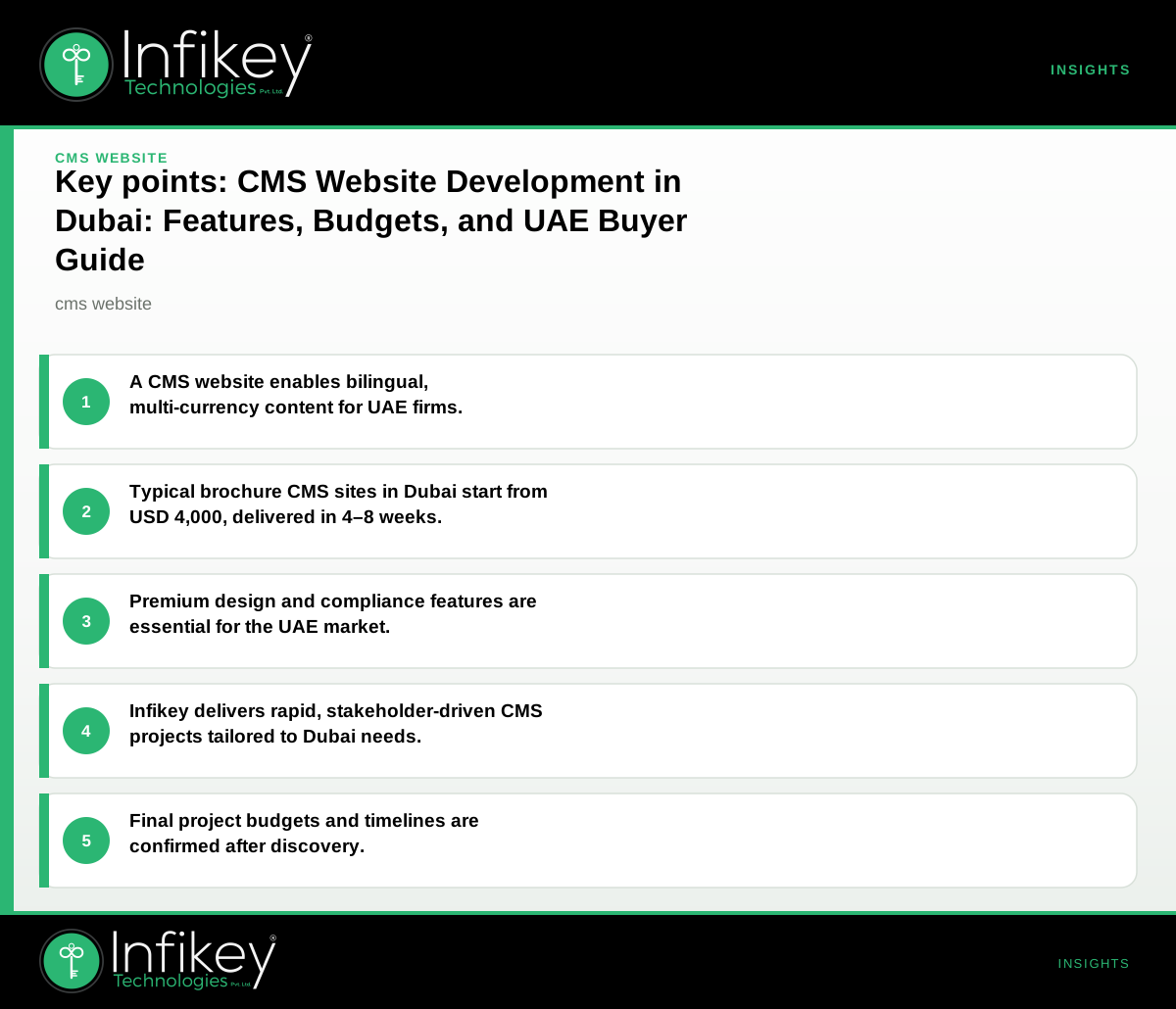
A CMS website gives Dubai and UAE businesses the flexibility to manage content, adapt to multi-currency needs, and present a premium image to demanding stakeholders. In a region where fast decisions, bilingual content, and compliance are essential, the right CMS solution is a strategic asset. Here’s what UAE buyers need to know about CMS website development, features, budgets, and working with a delivery partner like Infikey Technologies Pvt. Ltd..
Why UAE Firms Choose a CMS Website for Their Business
A CMS website (Content Management System website) lets non-technical teams easily update pages, products, and news—without developer bottlenecks. For Dubai and UAE organisations, this means:
- Supporting both English and Arabic content for diverse audiences
- Handling multiple currencies and regional payment gateways
- Enabling rapid campaign launches in a fast-moving market
- Ensuring compliance with UAE data and content regulations
Whether you’re in financial services, retail, healthcare, or professional services, a CMS website is now a baseline for digital presence in the UAE. The ability to manage your website’s content internally, respond quickly to market changes, and maintain consistency across languages and currencies is crucial for growth in the UAE’s competitive landscape.
Essential Features of a Modern CMS Website in the UAE
When selecting or building a CMS website, UAE buyers should prioritise:
- Bilingual support: Seamless switching between English and Arabic, with right-to-left layout handling
- Multi-currency readiness: Price display, checkout, and invoicing in AED, USD, and other key currencies
- Role-based access: Editors, marketers, and compliance reviewers can work in parallel
- Premium design: High-quality visuals and layouts that reflect your brand’s standards
- Compliance tools: Privacy, cookie, and content moderation features aligned with local regulations
- Mobile-first experience: Given the UAE’s high mobile usage rates
Platforms like WordPress, Drupal, and headless CMS options can all be tailored to these needs by experienced partners. Choosing the best CMS for business UAE requirements means looking for flexibility, security, and scalability. For example, a retail brand in Dubai might need a CMS that can handle flash sales in multiple currencies, while a healthcare provider may require strict data privacy and multilingual patient information.
CMS Website Development Dubai: Local Expertise Matters
When considering cms website development Dubai services, it’s important to work with a partner who understands the unique business environment of the city. Dubai’s fast-paced business culture, regulatory landscape, and cosmopolitan population demand CMS solutions that are both robust and adaptable. Infikey Technologies Pvt. Ltd. brings local experience to every project, ensuring that your CMS website meets both technical and cultural expectations.
- Local payment gateway integrations (such as Network International, PayTabs)
- Hosting options that comply with UAE data residency requirements
- Arabic language SEO and content localisation
- Support for Dubai-specific business practices, such as VAT invoicing
Choosing a Dubai-based CMS website development partner ensures smoother communication, faster support, and a better understanding of your market’s needs. For more on our approach, see Website development.
Bilingual CMS Website UAE: Meeting Multilingual Demands
A bilingual CMS website UAE is no longer optional for most organisations. The UAE’s official language is Arabic, but English is widely used in business. Your website must cater to both audiences:
- Accurate translation: Not just word-for-word, but culturally relevant messaging
- Right-to-left (RTL) layout: Ensuring Arabic pages display correctly
- Language toggles: Easy switching between English and Arabic
- SEO for both languages: Optimising content, metadata, and URLs for English and Arabic search queries
For example, a financial services firm may need to publish regulatory updates in both languages, while a retail business must ensure product descriptions and promotions are equally compelling in English and Arabic. Infikey Technologies Pvt. Ltd.’s delivery process includes bilingual content planning, translation QA, and editor training for both language tracks.
Multi-Currency CMS Website: Expanding Your Reach
A multi-currency CMS website is essential for UAE businesses serving both local and international customers. The ability to display prices, accept payments, and invoice in multiple currencies (such as AED, USD, EUR, GBP) can:
- Increase conversion rates by reducing friction for overseas buyers
- Simplify accounting and reporting for cross-border sales
- Support regional expansion without rebuilding your site
Key features for multi-currency CMS websites include:
- Real-time currency conversion or fixed pricing per region
- Localised checkout flows and payment gateways
- Currency-specific promotions or discounts
- Transparent display of taxes and fees
For example, a Dubai-based e-commerce platform can use a CMS to show AED prices to local shoppers and USD/EUR to international visitors, all managed from a single dashboard. This flexibility is a competitive advantage in the UAE’s global marketplace.
CMS Website Cost UAE: What to Budget For
Understanding cms website cost uae is critical for planning your digital investment. Project budgets vary widely based on features, complexity, and partner expertise. Here are typical CMS website project shapes for the UAE market, based on Infikey Technologies Pvt. Ltd.’s delivery experience:
- Corporate brochure or service site:
- 8–15 pages, bilingual CMS, premium design, basic SEO - Ballpark: USD 4,000–12,000 - Timeline: 4–8 weeks
- Custom web portal with dashboards and integrations:
- Auth, roles, data integrations, staging/production - Ballpark: USD 15,000–60,000+ - Timeline: 8–20 weeks
- Ongoing digital marketing/SEO retainer:
- Technical SEO, content, reporting - Ballpark: USD 800–3,000/month - Timeline: Ongoing, first results in 8–12 weeks
Final scope and commercials are confirmed after a discovery phase. These ranges are for planning only; actual costs depend on your specific requirements. For more details, see Website development.
Best CMS for Business UAE: Platform Selection Guide
Selecting the best CMS for business UAE depends on your industry, scale, and digital ambitions. Common options include:
- WordPress: Flexible, user-friendly, and widely supported. Ideal for SMEs, blogs, and marketing sites.
- Drupal: Highly customisable and secure. Suitable for complex, enterprise-grade sites.
- Headless CMS (Strapi, Contentful): Decouples content from presentation, enabling omnichannel delivery and advanced integrations.
Key factors to consider:
- Multilingual and multi-currency support
- Security and compliance features
- Integration with CRM, ERP, and marketing tools
- Scalability for future growth
Infikey Technologies Pvt. Ltd. advises on platform selection based on your business objectives and technical requirements, ensuring you get a CMS that grows with your organisation.
Example CMS Website Projects and Budget Ballparks
To help with planning, here are typical CMS website project shapes for the UAE market. These are not quotes, but realistic ballparks based on Infikey Technologies Pvt. Ltd.’s delivery experience:
- Corporate brochure or service site:
- 8–15 pages, bilingual CMS, premium design, basic SEO - Ballpark: USD 4,000–12,000 - Timeline: 4–8 weeks
- Custom web portal with dashboards and integrations:
- Auth, roles, data integrations, staging/production - Ballpark: USD 15,000–60,000+ - Timeline: 8–20 weeks
- Ongoing digital marketing/SEO retainer:
- Technical SEO, content, reporting - Ballpark: USD 800–3,000/month - Timeline: Ongoing, first results in 8–12 weeks
All timelines and commercials are confirmed after a tailored discovery process. For a detailed proposal, [[Contact Infikey]({{contact](/ae/contact))}}.
CMS Website Checklist for UAE Buyers
Before starting your CMS website project, ensure you:
- Define all required languages (English, Arabic, others?)
- List currencies and payment methods needed
- Map user roles: who edits, who approves, who publishes?
- Gather brand assets for premium presentation
- Identify compliance requirements (privacy, content, hosting)
- Set clear launch timelines and internal review cycles
- Shortlist CMS platforms that fit (WordPress, Drupal, headless, etc.)
- Choose a delivery partner with UAE project experience
How Infikey Delivers CMS Websites for Dubai and the UAE
Infikey Technologies Pvt. Ltd. approaches CMS website projects with:
- Discovery workshops to clarify business, content, and compliance needs
- Rapid prototyping for stakeholder feedback (often within the first week)
- Bilingual and multi-currency implementation as standard for UAE clients
- Secure, scalable hosting and handover documentation
- Ongoing support options for content, SEO, and platform updates
Our delivery is designed for the UAE’s fast decision cycles and premium expectations. See more about our Website development or Digital marketing and SEO services.
Key Considerations for Bilingual and Multi-Currency CMS Websites
Dubai’s business environment demands:
- Accurate Arabic translation and right-to-left layout testing
- Dynamic currency switching and local payment gateway integration
- Content moderation workflows for compliance with UAE laws
- Stakeholder training for both English and Arabic editors
A CMS website that gets these details right reduces friction and supports growth across the region. For example, a retail company expanding across GCC countries can use a CMS to manage product launches in multiple languages and currencies, while a professional services firm ensures legal notices are always up to date in both English and Arabic.
CMS Website Delivery: Timelines, Budgets, and What to Expect
Most UAE CMS website projects (brochure/service sites) are delivered in 4–8 weeks, with more complex portals taking 8–20 weeks. Budgets typically fall in the USD 4,000–60,000+ range, depending on scope. All timelines and commercials are confirmed after a tailored discovery process. For a detailed proposal, Contact Infikey.
Next Steps: Start Your CMS Website Project in Dubai
A CMS website is a foundation for digital success in the UAE. If you need a premium, bilingual, and compliant solution, Website development from Infikey Technologies Pvt. Ltd. is designed for regional needs. Talk to Infikey for a scoping call or tailored proposal.